Sense in the Sea
2021-2020
Between the Sea, Think like Google Translate, Story of the Sea
The theme “Senses in the Sea” was exhibited in three different sea forms: “between the sea” Film installation, “Think like Google translate”spatial installation, and a film ”Story of the sea”. Starting from the sea object, it depicts the three different senses in expanded terms of the sea: the sense of isolation and loneliness, the sense of language, and the sense of death and life.
The sea and Youn Hee Park have a very complex psychological relationship. The sea is also a symbol of wandering, always ready to leave but at the same time a symbol of disappointment and obstacles from the new world, the persistence of unstable forms of life and death, and longing for Korea, a geographical peninsula, is always inherent.
The concept of “sense in the sea” is the isolation of minority cultures in the European culture based on cultural hegemony, the lack of minority cultures expression via the global language, English, and travel restriction by immigration policies. The following questions are further raised indirectly in this work: how will the global development in a westerly direction affect this world? What is the globalisation of this generation, in which all cultures have to be interpreted in a Western direction?
Between the sea
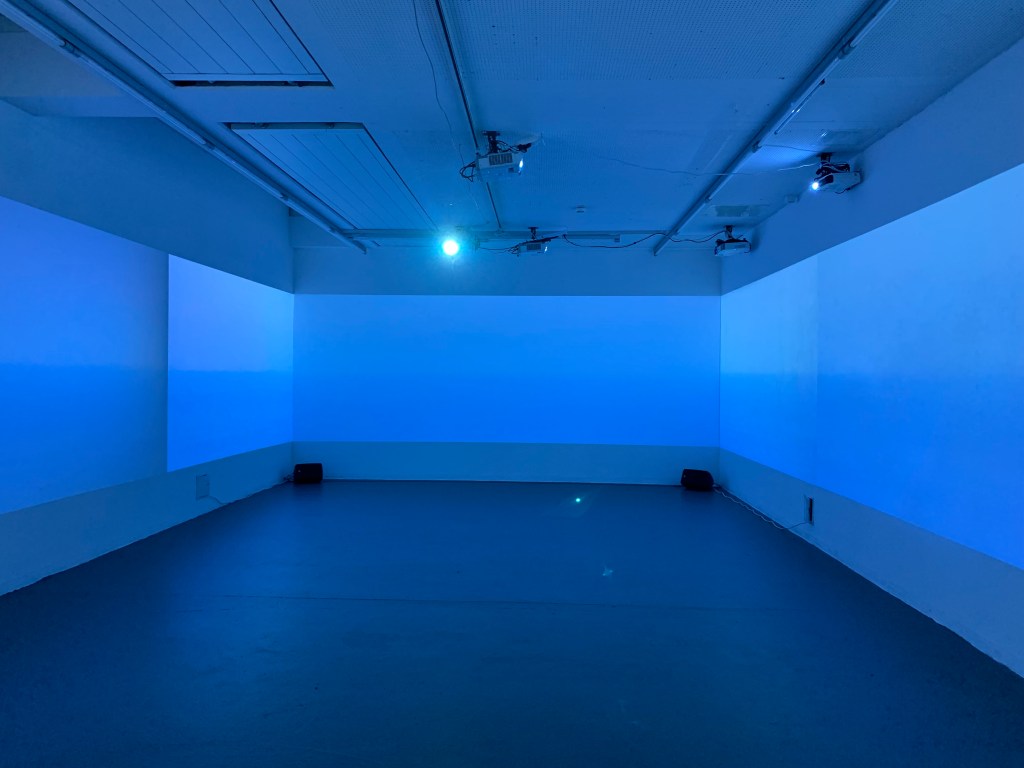
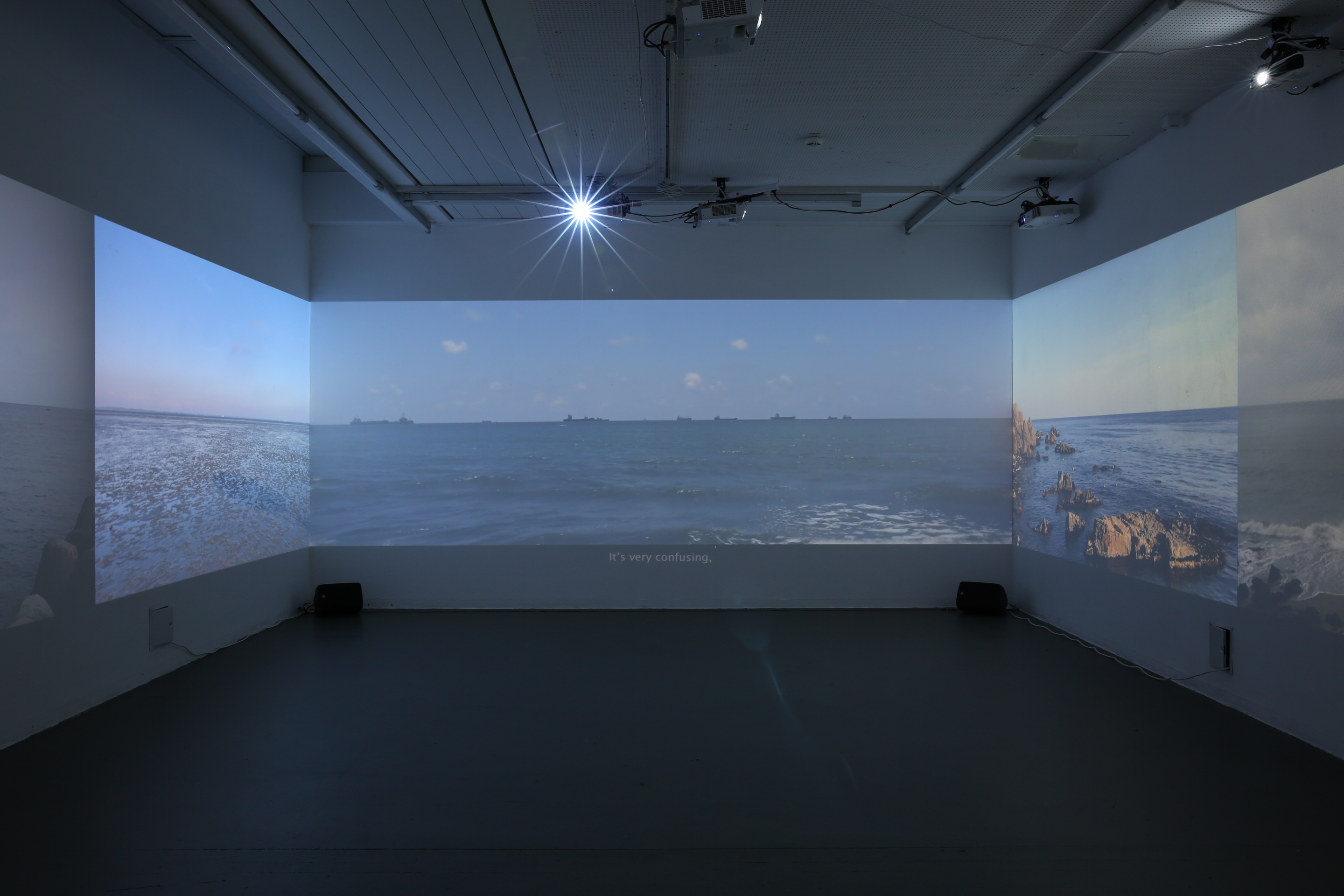
Film installation : 8 video channel 8:45min
The sea is a place where people cannot stand on their feet. You create your own island where nobody else can stay or enter. The island represents the psychological isolation resulting from cultural conflict within society and a lack of language expression. Leaping over the horizon in the film represents a strong desire to affirm the existence and overcome all obstacles.
Link to : https://vimeo.com/737492991(password:2021)
Story of the sea
Film 6:53min
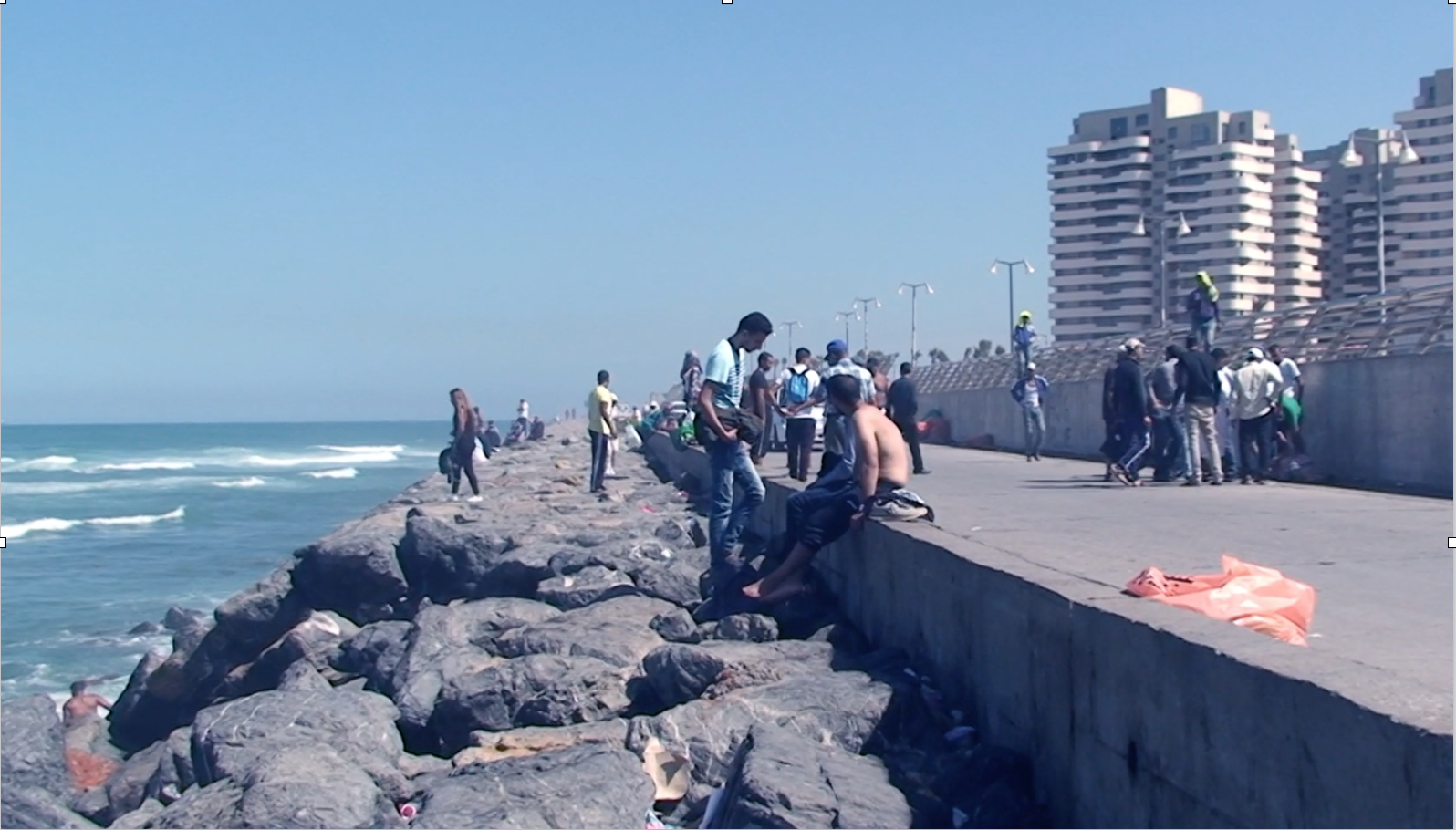
The film about suicide at sea is conveyed through personal experiences and memories. The storytelling brings images of suicide in the audience’s imagination on the borderline between fact and fiction. Based on personal memories, the story ends with a documented asylum regulation in Germany. The document of the Refugee Ordinance about suicide and the story of suicide, which sound like fiction, do not seem to be related, but they are connected to each other in the act of suicide, which is the desire to give up one’s life, the desire to end one’s life.
The asylum regulations contain the human right to stay in Germany for refugees at risk of committing suicide.The irony of being able to stay in Germany only when they are willing to give up on their life; Refugees crossing the sea to Europe in mortal danger, including those who die without being rescued. The refugees‘ human rights are recovered indirectly through storytelling of suicide.
Link to : https://vimeo.com/672349121 (password:2021)
Think like Google Translate
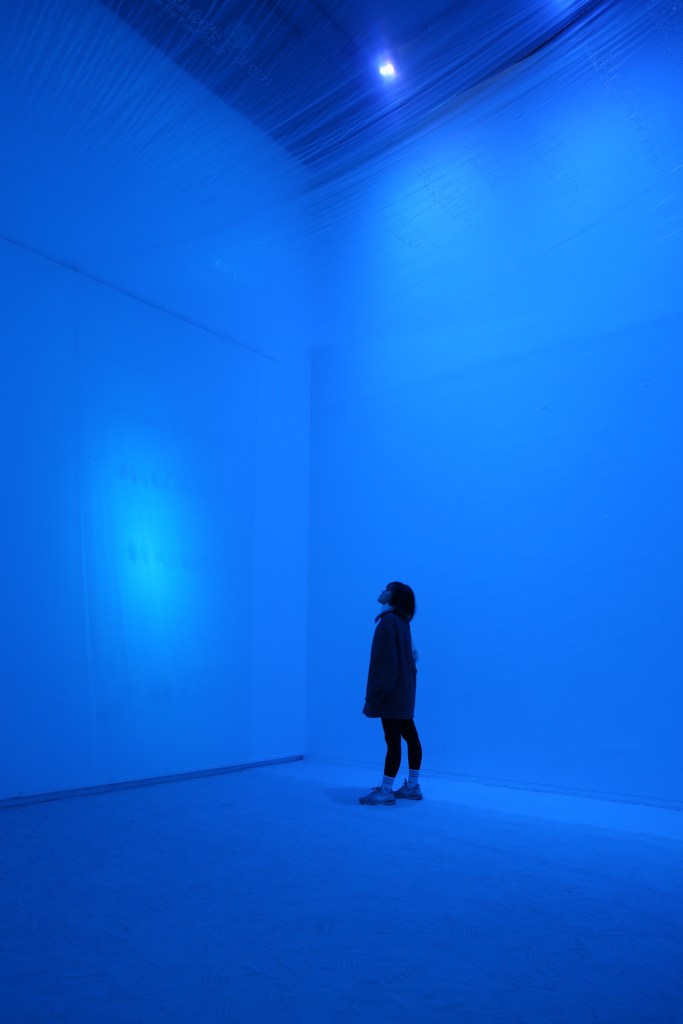
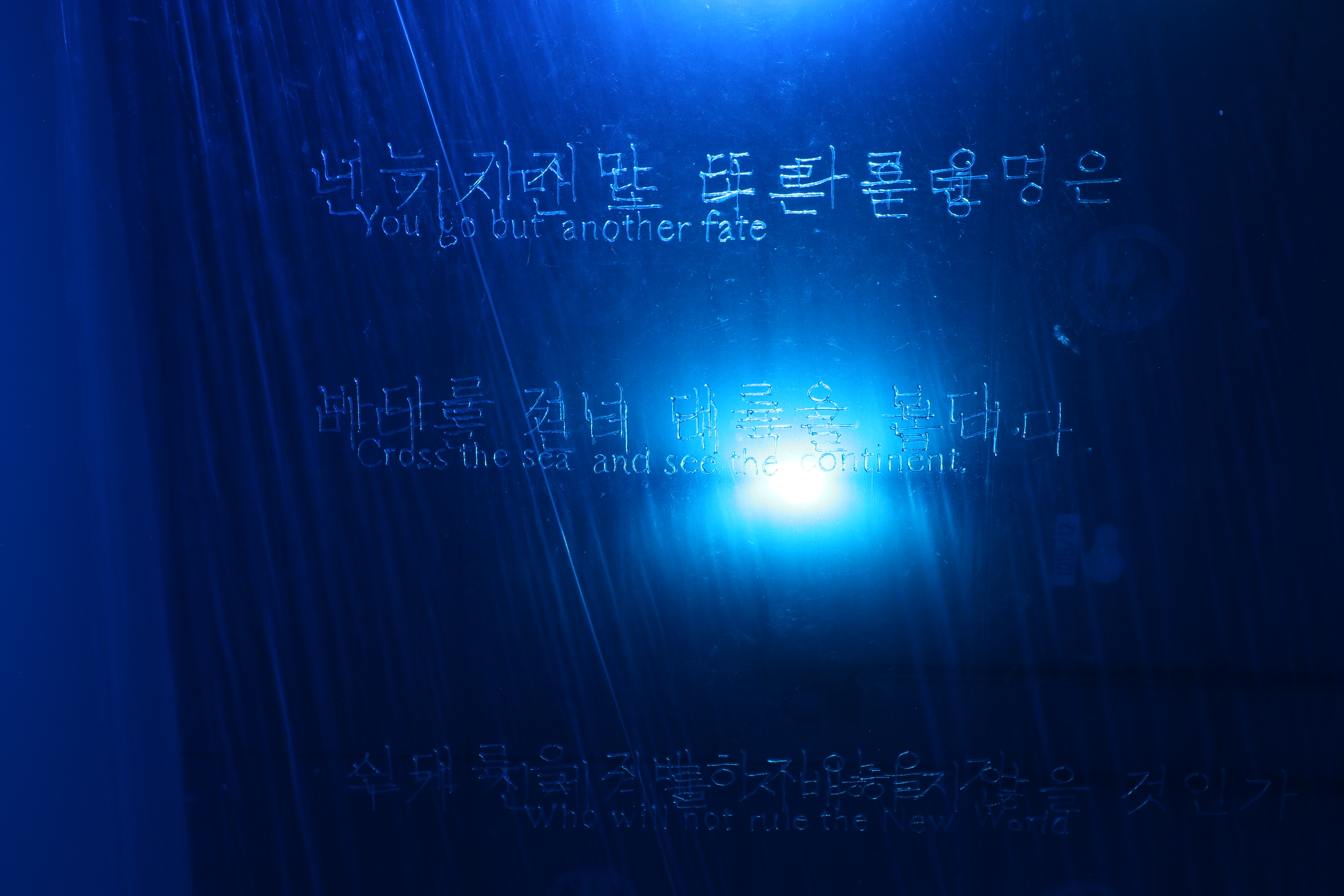
Installation in A3 : Blue filter light, white sand, vinyl, mix media
Language dominates the thinking process. English and Google Translate, which is the heart of global languages, change how you think. To make good use of Google Translate, you have to think like Google Translate. Google translate is at the center of my thoughts. Google Translate uses statistical machine translation (corpus-based machine translation; CBMT) to probabilistically translate common expressions. This translation method can ignore the linguistic personality of the individual and therefore cannot translate literary expressions such as poetry. Google Translate kills minority expressions.
This topic is about the psychological distance to language, allegorical sense of language in Google Translate, the importance of global language in The Global Age, and language-dominated cultural imperialism. The topic is connected with digital colonialism since Google Translate always utilizes big data.
The installation represents the process of translating a poem about the sea through migration perspectives using Google Translate. How to think like Google Translate? How to lose your native language? Why are so many languages extinct? How to reflect individual opinions in the allegorical sense of language?
When encountering a foreign language for the first time, language is read as an image, not as language. By overlapping the original linguistic expressions and translated linguistic expressions, the visual emotion is conveyed through an image that is a language that cannot be transferred. By comparing the original poem with the translated poem, you can see how few words survive from the translation process.

 Youn Hee Park